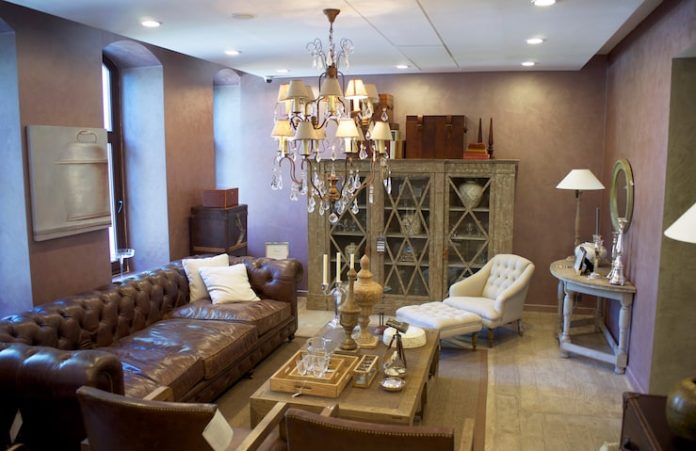


The Combination That Defeats Both Pure Styles
A room furnished entirely in authentic period antiques produces a museum quality — beautiful but not quite livable. A room furnished entirely in contemporary design produces precision and clarity but often lacks warmth and personal history. The combination that most people actually want — a room that feels both current and personal, designed and collected, new and evolved — is the mixed approach that combines pieces across eras with a unifying aesthetic intelligence.
Mixing vintage and modern isn’t simply putting old things and new things in the same room. It requires understanding what makes each piece worth keeping, how pieces from different eras can share a visual conversation, and what unifying principles hold the mixture together.
The Unifying Thread That Makes Mixing Coherent
A successful mix of vintage and modern maintains at least one consistent thread across all periods represented: a consistent color palette, a consistent material family, a consistent scale and proportion, or a consistent visual character (minimalist, maximalist, natural, industrial). Without this thread, mixed periods read as random accumulation rather than designed collection.
The simplest unifying approach: a neutral color palette throughout. When walls, textiles, and backgrounds are in a consistent neutral family, pieces from radically different periods share a visual context that allows their individual characters to emerge without competing. A 1940s Art Deco side table and a contemporary sofa can coexist beautifully in a room with consistent warm ivory and natural wood tones; the same pieces in an incoherent color scheme compete.
Scale as the Most Important Compatibility Variable
Scale mismatches between vintage and modern pieces create more visual discomfort than style mismatches. A massive Victorian armoire in a room of clean-lined contemporary furniture is a scale problem regardless of how beautiful either piece is individually. A delicate mid-century side table overwhelmed by a large contemporary sofa is a scale problem that no amount of styling resolves.
Before combining pieces from different eras in the same room, assess the scale relationship. Contemporary furniture tends to be lower and wider than Victorian and traditional period furniture; pairing low contemporary with tall Victorian creates a height mismatch that can be jarring. The adjustment: either select vintage pieces that share the proportional scale of the contemporary pieces, or use the height difference deliberately as a design contrast with an understanding of why it’s present.
The Focal Point Vintage Piece
In a primarily contemporary room, a single significant vintage piece becomes the room’s character anchor — the element that prevents the contemporary design from reading as anonymous or showroom-generic. An antique chest in a modern bedroom, a mid-century credenza in a contemporary living room, a vintage industrial lamp in a minimal workspace — each introduces history and character that contemporary design alone doesn’t provide.
The focal point vintage piece strategy works because it gives the vintage character a specific, deliberate role in the room rather than making it compete for dominance with contemporary pieces. The room reads as contemporary with historical depth rather than as a confused mix of periods. This is the easiest entry point for homeowners who want to incorporate vintage pieces but aren’t confident about extensive mixing.
What Vintage Brings That Contemporary Can’t Replicate
The value of vintage furniture in a contemporary interior isn’t primarily aesthetic — though it often provides visual interest that new production furniture at any price point can’t match. It’s the quality of genuine history: the wear patterns that develop over decades of use, the hand-craftsmanship that was standard in mid-century furniture and rare in contemporary production, and the proportions of pieces designed before the standardization of contemporary furniture forms.
These qualities — wear, craft, proportion — create the intangible quality that designers describe as ‘soul’ in an interior. A room with these qualities feels like it belongs to someone with a life and a history rather than to a consumer who purchased a complete look. The mix of vintage and modern, done well, is the most direct way to achieve this quality in a residential interior.