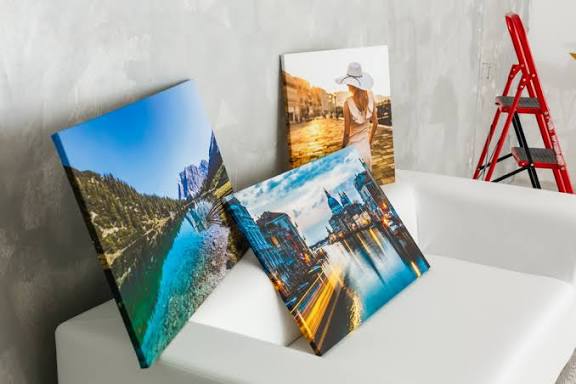


When a canvas print goes into the wall, it may look perfect. Then eventually, you can see it start to buckle (bow), sag, or ripple.
That does not necessarily mean the artwork is broken. Getting the canvas properly stretched and mounted is in many cases where the problem really lies. This can give you a reason why and restore the print while not worsening the issue.
What Does “Bowing” Mean?
A bowing occurs when a canvas is no longer resting flat against its frame. Instead, some of the surface bends inward or outward.
You may notice:
- A loose or sagging centre
- Wavy edges
- Uneven tension
- Small ripples across the print
- Corners that do not fit carefully
These problems can be exaggerated in bright lighting, especially at an angle from the canvas.
Why Does Canvas Bow?
Reason that is less common but encountered from time to time is uneven tension. This will put a definite tension on the canvas, and the top and bottom of a frame must have consistent tension. If one corner is tight than another, the material can slowly pull out of alignment.
Humidity can also affect canvas. Natural fabric is sensitive to humidity and temperature changes. Now if a room gets really humid or dry then the stuff is going to expand and contract.
So, low quality stretcher bars can be a factor as well. The frames are also not square or they twist, bend, and the canvas cannot remain flat.
How Proper Stretching Helps?
Great quality canvas stretching is a process that puts the same amount of tension across the cloth. The two canvas pieces are then aligned over the stretchers before being firmly pulled tight so it doesn’t get too stretched on the frame.
You do not want to pull the material as hard as possible. Over-tensioning may tear or damage the fabric or over-stress (too much stress on an element) the frame.
Before adding the final piece to the frame, a meticulous framer inspects each corner, edge, and tension.
Why the Stretcher Frame Matters?
A canvas needs to be supported, or else it will sag. It has to be straight, square, and heavy enough for whatever artwork you are mounting.
Large canvases need particular care. A flimsy frame is easy to stretch and bowing becomes more probable.
This means quality canvas stretching is both the fabric and the stretcher frame. Neither can play without the other performing as well.
When to Call a Professional?
If the print has a lot of sentimental or financial value, it is generally safer to seek professional help.
If you are to find high-quality picture framing in Sydney, the task of discerning whether the issue is with the canvas itself or either its stretcher frame or mounting method rests firmly on those that have many years of experience. They can then suggest an appropriate fix.
This will provide you with additional professional handling and is useful for those large artworks or delicate prints and canvases that have already started to show some very noticeable waves.
Preventing Bowing in the Future
When your canvas is mended, consider the art it adorns. Do not put it in areas with high humidity, instant temperature differences, or continuous direct sunlight.
Keep a lookout on your artwork once in a while for alterations of tension or shape. Correcting a problem early on is much simpler.
Consider the frame materials and stretching method instead of the final aesthetics, and you will find high-quality framers in Sydney.
You Start a Flat Canvas with Proper Technique
Canvas bowing is annoying, but often remedial. All these problems arise from uneven tension, moisture changes, and poor framing.
Canvas stretching will give the artwork the sturdy foundation it needs to lay properly and present itself how it should.
For those where the canvass matters, preparation and workmanship are worth it. Your print should look better today and stay stable for years if you stretch it correctly.