

The Purchase That Lives Outside and Ages Differently Than Indoor Furniture
Outdoor furniture faces conditions that indoor furniture never encounters: UV radiation that degrades colors and materials, moisture cycles that swell and shrink hygroscopic materials, temperature extremes that stress joints and surface treatments, bird droppings and environmental pollution that attack finishes, and the physical stress of outdoor use patterns.
These conditions accelerate material degradation at rates that make the quality and material selection of outdoor furniture more consequential than for equivalent indoor furniture. An outdoor furniture purchase at the wrong material specification for the climate and exposure conditions fails visibly in two to three seasons; the right material in the right application looks good for ten to twenty years.
Teak: The Premium Option and Why
Teak is the outdoor furniture material against which others are compared because of its exceptional natural durability: high natural oil content makes it naturally resistant to moisture, insects, and decay without any treatment. Teak furniture left entirely untreated in outdoor exposure weathers to a silver-gray patina that many owners prefer to the original golden-brown tone. It can be maintained in its original color with periodic teak oil or sealer application.
The trade-off is cost — teak furniture commands a significant premium over other hardwood options — and sourcing. FSC-certified teak from sustainably managed plantations is the responsible sourcing standard; teak from uncertified sources may contribute to deforestation of old-growth forests. The lifespan of quality teak furniture (20–40 years with moderate maintenance) amortizes its higher cost favorably against materials that require replacement in 5–10 years.
Powder-Coated Aluminum: The Lightweight Durable Alternative
Powder-coated aluminum furniture is the material specification that most closely approximates teak’s durability at a substantially lower cost. Aluminum doesn’t rust (it forms a stable oxide layer that doesn’t progress the way iron rust does), the powder coating protects the aluminum surface from oxidation and provides color stability, and the lightweight construction makes rearranging and storing furniture manageable.
The limitations worth knowing: powder coating can chip, scratch, or crack under impact, and once chipped, the exposed aluminum at the chip site will oxidize. Touch-up paint formulated for powder-coated surfaces addresses chip damage when applied promptly. Aluminum furniture that’s powder-coated with quality equipment and material has a coating that’s far more durable than brushed-on paint alternatives.
Wicker and Rattan: The Correct Context
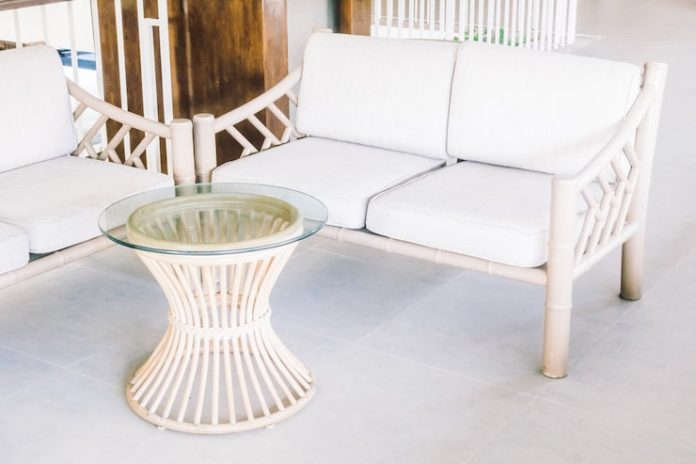
Natural wicker and rattan are indoor-outdoor materials in climates without significant moisture and UV exposure — they’re appropriate for covered porches, sunrooms, and covered outdoor dining areas, but not for direct weather exposure in most climates. Natural rattan absorbs moisture and can develop mold in humid conditions; UV exposure bleaches and brittles the material over time.
Synthetic resin wicker — the category most commonly sold as ‘outdoor wicker’ or ‘all-weather wicker’ — is a different product: woven synthetic resin (polyethylene or similar) over a powder-coated aluminum frame. Quality synthetic resin wicker withstands direct weather exposure well, maintains its color, and cleans easily. The visual appearance closely matches natural wicker; the performance under outdoor exposure is entirely different. When purchasing ‘outdoor wicker’ furniture, confirm the material is synthetic resin, not natural.
Wood Alternatives: Cedar, Shorea, and Acacia
Cedar is the most widely available affordable outdoor hardwood option in North America — naturally rot-resistant, lightweight, and less expensive than teak. Western red cedar has natural preservatives (thujaplicins) that provide genuine decay resistance; untreated cedar left outdoors weathers to gray but doesn’t rot quickly. Cedar furniture can last 10–15 years with moderate maintenance and 5–8 years with essentially no maintenance before significant deterioration.
Shorea and acacia are tropical hardwoods sometimes marketed as ‘teak alternatives’ at lower price points. Both have reasonable durability in outdoor applications — significantly better than pine or fir — but neither matches teak’s oil content or natural weather resistance. They require more maintenance than teak to maintain appearance and have shorter serviceable lifespans under equivalent outdoor exposure.