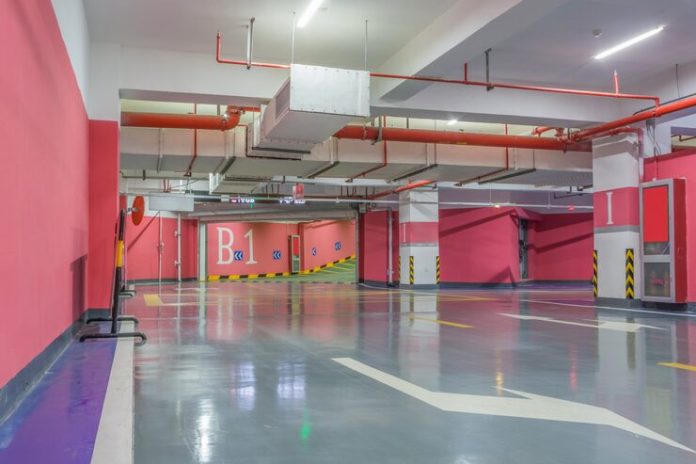


The Floor Upgrade That Changes How the Garage Looks and Functions
An epoxy-coated garage floor — concrete sealed with an epoxy resin that hardens to a durable, glossy, or matte surface — transforms a stained, porous concrete slab into a surface that’s easy to clean, resistant to automotive fluids and most chemicals, visually attractive, and significantly more durable under foot and vehicle traffic than bare concrete. The transformation is more dramatic than almost any other single garage improvement.
The application quality of an epoxy floor is almost entirely determined by the surface preparation preceding the application. An epoxy applied to inadequately prepared concrete fails quickly — bubbling, peeling, delaminating — regardless of the product quality. An epoxy applied to properly prepared concrete adheres permanently and provides the performance the product was designed to deliver.
Concrete Preparation: The Step That Determines Everything
Concrete must be clean, sound, and porous to accept epoxy adhesion. The preparation sequence: clean the concrete of all oil, grease, and chemical contamination (a concrete degreaser and stiff brush, rinsed thoroughly and allowed to dry completely); test the concrete for existing sealer (sprinkle water on the surface — if it beads rather than absorbing, the concrete has a sealer or is contaminated that must be removed before epoxy will bond); acid etch or mechanical grind the surface to open the concrete pores and create the profile that epoxy bonds to.
Acid etching (muriatic acid or phosphoric acid solution applied to the floor, allowed to react, then rinsed completely) is the most common DIY preparation approach. Grinding (with a floor grinder rented from equipment rental companies) is more thorough and produces a more consistent profile but requires equipment and technique. Either approach must be followed by thorough rinsing and complete drying — applying epoxy to damp concrete is one of the most common application failures.
Choosing the Right Epoxy Product
The epoxy floor coating market contains a wide quality range. Water-based epoxies (the majority of products marketed to homeowners at hardware stores) have lower solids content, lower build thickness per coat, and shorter useful lifespans than 100% solids epoxy products used in commercial applications. They’re easier to apply, have lower VOC content, and cost less — but they don’t provide equivalent long-term performance.
For a residential garage floor that will receive vehicle traffic, heavy equipment, and occasional automotive fluid exposure, a 100% solids epoxy or a high-solids epoxy with minimum 50% solids content provides adequate build and durability. These products require more careful mixing and application (working time before the mixed product begins to set is limited) but produce floors that last 10–20 years versus the 3–7-year lifespan typical of water-based products under equivalent use.
Application: Timing, Temperature, and Technique
Epoxy application has specific environmental requirements: surface temperature between 50°F and 90°F, concrete temperature at least 5°F above the dew point (to prevent moisture from forming on the surface), and no rain expected for at least 24 hours after application. These conditions eliminate some seasonal windows for garage floor epoxy application in cold climates.
Application technique: after mixing epoxy and hardener precisely per the manufacturer’s ratio instructions (most failures trace to incorrect mixing ratios), cut in the perimeter with a brush and apply the field with a notched squeegee or roller. Work in sections, maintaining a wet edge to prevent lap marks. Broadcast colored flakes or non-slip aggregate while the epoxy is still wet if desired. Allow the full cure time specified (typically 24 hours before foot traffic, 72 hours before vehicle traffic) before use.
The Topcoat and Long-Term Maintenance
A clear polyurethane or polyaspartic topcoat applied over the cured base epoxy coat provides UV resistance (epoxy yellows under UV exposure without topcoat protection), additional chemical resistance, and a harder wear surface. This topcoat layer is what most people perceive as the floor’s surface quality — it determines the gloss level, the color stability, and the surface hardness that determines long-term appearance.
Long-term maintenance of an epoxy floor is straightforward: sweep regularly to remove grit that abrades the surface under foot and vehicle traffic, clean automotive fluid spills promptly (epoxy is chemical-resistant but prolonged contact with concentrated acids and solvents eventually affects the surface), and avoid dragging sharp metal objects across the surface. A well-maintained epoxy floor requires no recoating for 10+ years; one that’s neglected or improperly maintained may need touch-up in 5–7 years.