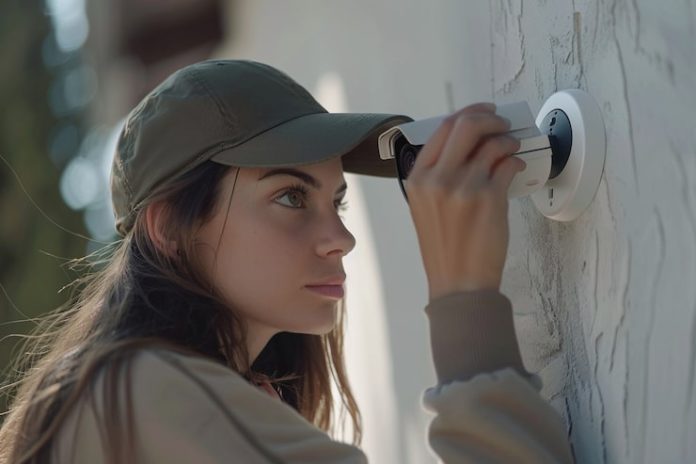


The Security Theater vs. Genuine Protection
A video doorbell and a yard sign from a security company are the residential security improvements most widely installed in American homes. Both are valuable but neither creates the security depth that genuinely deters determined burglars and prevents the majority of residential property crimes. Most residential burglaries are crimes of opportunity — the criminal looks for the easiest target, and a home that presents multiple obstacles (not just one visible camera) is not the easiest target.
Genuine home security operates in layers: natural surveillance (making the home visible to neighbors and from the street, eliminating concealment spots for approach), mechanical barriers (quality locks, reinforced entry points), detection (alarms and cameras that detect and document intrusion), and deterrence (signals that detection exists and response will follow). A video doorbell provides the detection layer without addressing the other three.
Natural Surveillance: The Security Through Design Layer
Natural surveillance — the environmental design approach of creating conditions where the home’s entry points and approaches are visible to neighbors and passersby — is the most passive and most effective security layer. A home whose front door is visible from the street, whose walkways are clear and well-lit, and whose landscaping doesn’t provide concealment for approach is intrinsically more difficult to approach without being observed.
The specific changes that improve natural surveillance: trim landscaping that’s grown to provide concealment at entry points (large shrubs at corners of the house or adjacent to doors), improve lighting at all entry points so that approach in darkness is visible, ensure that the relationship between the home and the street allows neighbors to see activity at the doors and windows. These changes cost nothing if the existing landscaping already allows visibility; they cost the modest labor of trimming or redirecting landscaping if it doesn’t.
Mechanical Security: Making Entry Difficult
The majority of residential burglary entry points are doors and windows. The mechanical barriers that make these entry points significantly more difficult than average: deadbolt locks with at least a 1-inch throw (the bolt extending at least 1 inch into the door frame), reinforced door frames (the door frame is what actually fails in most kick-in attacks — the door itself stays intact while the frame splinters; strike plate kits with 3-inch screws that reach the stud behind the frame change this failure mode), and secondary window locks that prevent a sashed or unlocked window from being opened fully from outside.
Sliding glass doors are among the most commonly overlooked vulnerabilities: a standard sliding door can be lifted from its track with moderate force even when locked. A secondary bar or lock that prevents this lifting is a $10–$20 addition that eliminates a significant vulnerability.
Alarm Systems: What Actually Deters and What Doesn’t
Alarm systems with monitored response — a system that alerts a monitoring company who then notifies local law enforcement — have documented deterrent effect. Unmonitored systems (local sirens only, no monitoring) are significantly less effective because local sirens have become so common from false alarms that neighbors often don’t respond to them. The monitoring subscription is the component that creates the response that makes the alarm effective.
The placement of alarm system sensors matters more than the number of sensors: entry points (doors and ground-floor windows) are the locations that must be covered. Motion sensors in interior spaces cover the access paths between entry points and the rooms with valuables. A system with comprehensive entry coverage and motion detection provides meaningful security value; one with only a few sensors on primary doors leaves significant gaps.
Lighting: The Deterrence Layer That Works Overnight
Exterior lighting that activates on motion — covering the approach paths to entry points — deters approach by eliminating the darkness that makes unobserved approach possible, and alerts occupants to approaching activity. Motion-activated lights ($25–$150 per fixture) at the driveway, side entries, garage, and backyard entry points provide a detection and deterrence function throughout hours of darkness without continuous illumination.
The placement principle: lights should illuminate the approach path, not just the area immediately adjacent to the fixture. A flood light pointed down at the base of a wall illuminates the wall; one angled to cover the walkway or driveway approach illuminates the path where activity occurs. Position adjustment after installation to verify that the motion-activated coverage covers the intended approach paths rather than primarily illuminating the fixture’s immediate surroundings.